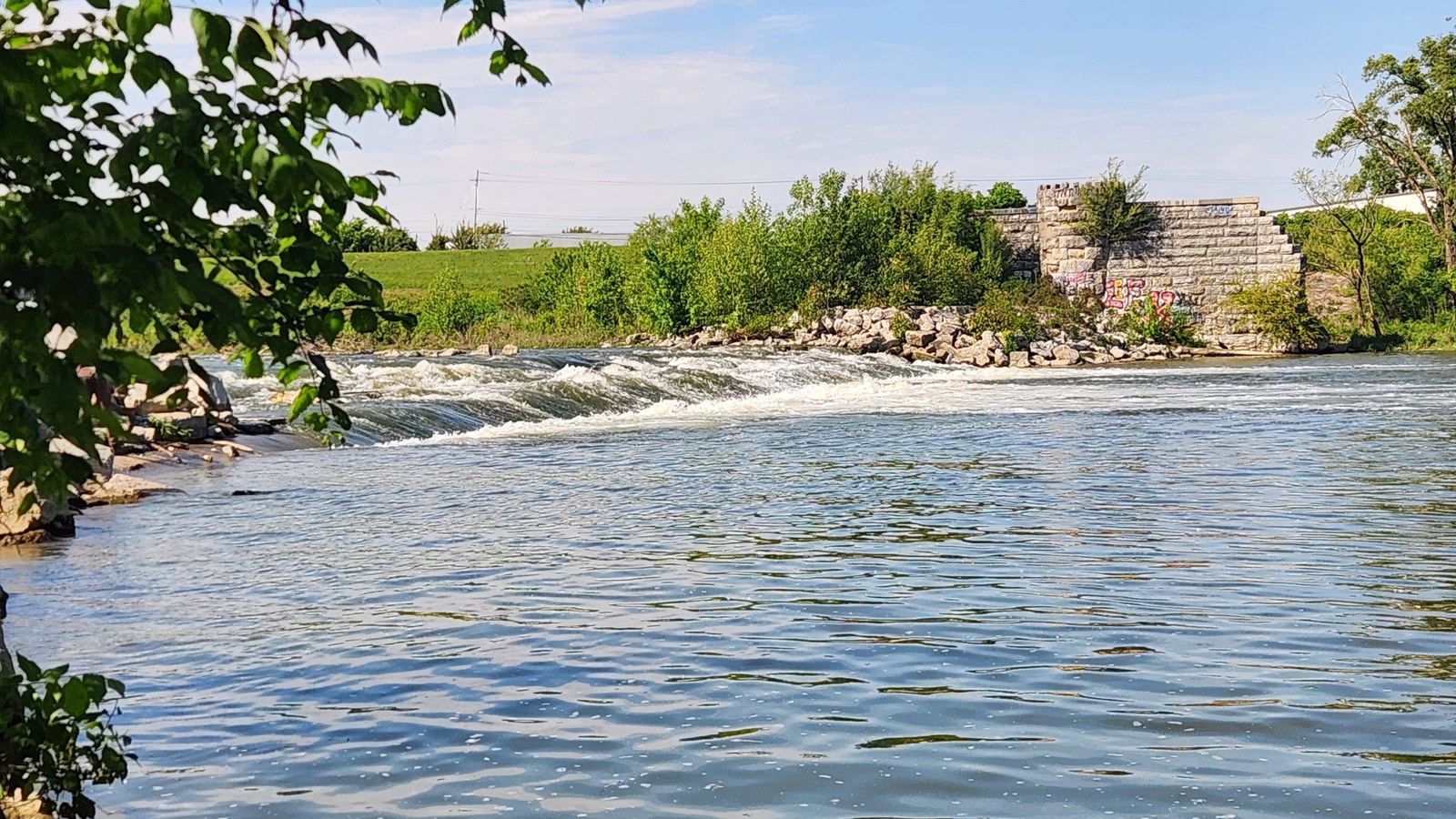
Indianapolis is removing the Emrichsville dam from the White River, just south of 16th Street, ending more than 125 years in which the concrete and stone structure blocked wildlife from moving freely up and down the river.
The city built the dam in 1899 to create a boating area called Lake Indy for Riverside Park. It stood about 19 feet tall from its foundation and altered the river for more than four miles upstream, but it never served flood control or the public water supply. Part of it collapsed in October 2018, and emergency repairs replaced the collapsed section with a smaller rock dam.
The removal is being paid for with a series of grants totaling about $875,000, most of it from the U.S. Fish and Wildlife Service, with the Indiana Department of Natural Resources and The Nature Conservancy also contributing. Low-head dams like this one are a known drowning hazard, and taking it out is expected to make the river and nearby parks safer as well as healthier.
The White River holds about 150 species of fish, and roughly 85 percent of them need to migrate upstream and downstream to complete their life cycles, according to Jerry Sweeten of EcoSystems Connections Institute, who has helped remove more than 23 low-head dams across Indiana. Freshwater mussels, among the state's most imperiled species, also depend on fish being able to move.
Only the in-stream portion of the dam is coming out. The two towers on the banks — one of them known to locals as the Beer Tower — will stay, after the city consulted historic preservation agencies. The design manager for the city's Department of Public Works says removal should wrap up December 18, with remaining work finishing in February 2027, followed by a year-long program monitoring the river's ecosystem, flow, and movement.